
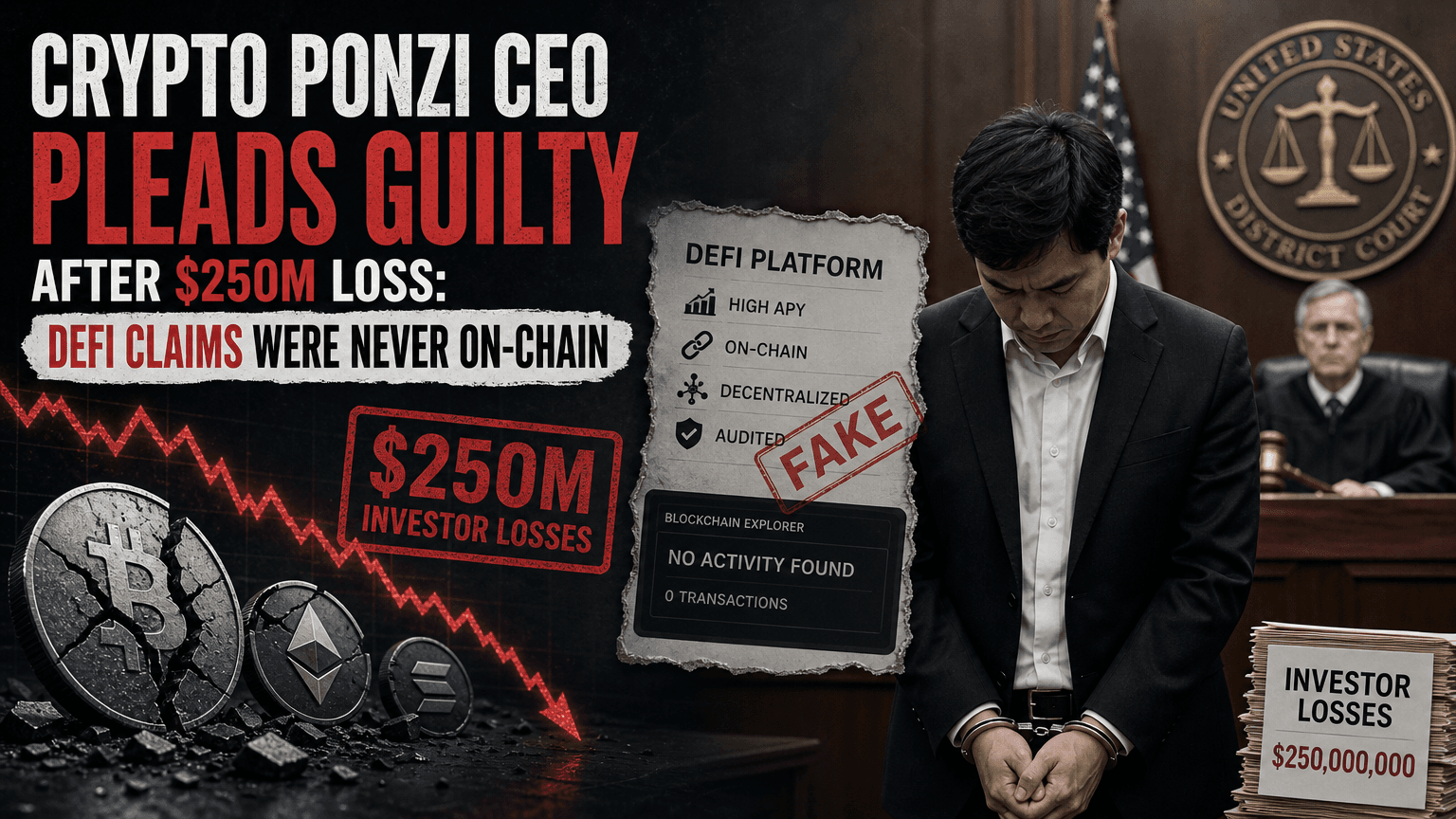
Crypto Ponzi CEO Pleads Guilty After $250M Loss: DeFi Claims Were Never On-Chain
03 July 2026
The Rise and Fall of Christopher Alexander Delgado: A Ponzi Scheme Unveiled
Christopher Alexander Delgado's guilty plea marks a significant chapter in the history of financial frauds, particularly within the realm of cryptocurrency, as he admitted to masterminding one of the largest crypto Ponzi schemes in the United States. Over three years, Delgado convinced investors to part with at least $400 million, promising substantial returns supposedly generated from Uniswap's decentralized exchange, though only around $1.5 million actually made it into these blockchain pools. This paltry investment contrasted sharply with the grandeur of his promises, a discrepancy that any investor could have verified on the blockchain.
The Deceptive Lure of Guaranteed Returns
Delgado's enterprise, known as Goliath Ventures, leveraged the complex terminologies of decentralized finance (DeFi) to appear as a cutting-edge investment opportunity. Investors were lured by the promise of 3 to 8 percent monthly returns — an enticing proposition tied to the perceived sophistication of crypto liquidity pools. However, the Ethereum blockchain — where Uniswap operates — is inherently transparent, recording every transaction in a public ledger accessible to anyone. Had investors scrutinized these records, they would have discovered that Goliath’s claims were grossly overstated. The transparency of DeFi protocols, ironically, was their opportunity to uncover the truth.
The Mechanics of DeFi and the Illusion of Investment
A genuine liquidity pool in DeFi allows participants to deposit cryptocurrencies into a smart contract, which then facilitates trades and generates returns from transaction fees. The blockchain records all these activities, including deposits, withdrawals, and the distribution of fees, ensuring that operations are publicly visible. Yet, Goliath's Uniswap activity revealed a glaring inconsistency — only $1.5 million was involved in actual trading, while the bulk of investor funds supported earlier investors in classic Ponzi fashion or financed Delgado’s lavish lifestyle.
Institutional Oversight and Legal Ramifications
The unraveling of the scheme has prompted legal scrutiny of several institutions, including JPMorgan Chase and Alston & Bird, questioning their roles in this massive financial deception. The allegations imply that the regular banking channels, possibly abetted by these institutions' oversight failures, allowed Delgado to perpetrate his fraud successfully for years. Class-action lawsuits are challenging whether these entities turned a blind eye to obvious signs of financial misconduct, a question that will shape future regulatory and legal landscapes concerning investor protections and institutional responsibilities.
Lessons in Investor Vigilance and the Role of Transparency
The major takeaway for investors eyeing DeFi products is the crucial role of due diligence. The essence of decentralized financial systems is transparency — every transaction is documented and retrievable. Investors should familiarize themselves with blockchain explorers like etherscan.io to verify investment claims. Authentic DeFi projects should willingly provide wallet addresses and engage in real on-chain activities consistent with their marketing promises. Verifying these details is fundamental, especially when faced with claims of implausibly high returns.
The Road to Restitution and Legal Proceedings
As proceedings continue, the chances of victims recovering significant portions of their investments seem slim. With Goliath's bankruptcy filing listing liabilities far surpassing assets, the recovery path extends through legal actions against associated institutions. This emphasizes the need for robust investor education and stringent oversight mechanisms to preempt similar scams. For now, the lens remains on the unfolding court battles and any further revelations about the wider network facilitating this grand deception.
The Continuing Search for Accountability
Federal investigations are ongoing, with the pursuit of potential accomplices in the Goliath Ventures saga. Delgado’s cooperation with authorities could offer insights into the broader operational framework, shedding light on the mechanisms behind the Ponzi scheme. Meanwhile, the class-action suits represent a collective effort by defrauded investors seeking recompense, albeit from deep-pocketed banks and law firms purported to have enabled the scheme rather than from the now nearly emptied Goliath coffers.
Guiding Questions for Potential Investors in Crypto Markets
In light of such a colossal fraud, potential investors must embrace rigorous scrutiny of any investment opportunity. Critical questions to ask include: How are the yields generated? Is there verifiable transaction data available on the blockchain? Are there third-party audits validating the claimed financial activity? Are the promised returns consistent with typical market performance? Affirmative and authentic responses to these inquiries can significantly mitigate investment risks, ensuring capital is placed in legitimate and transparent ventures.
Conclusion: The Urgency of Financial Literacy and Systemic Reform
The case of Christopher Alexander Delgado serves as a sobering reminder of the vulnerabilities present in the burgeoning world of cryptocurrency investments. It underscores the necessity of enhancing financial literacy among investors and improving systemic regulations and enforcement capacities. As the legal and regulatory processes unfold, they will hopefully refine the frameworks preventing future frauds, reflecting a more secure and trustworthy financial landscape for all participants.
Go to all articles
Read more
21 August 2026
Bitcoin surges 12% crosses $70,000: 5 key drivers behind the rally
19 August 2026
Bitcoin climbs towards $64,000 as cooling inflation and falling treasury yields aid recovery
17 August 2026
INSTITUTIONAL | Israel's Largest Bank Becomes the First Bank to Offer Crypto Trading
14 August 2026
Swissquote shares sink 10% as crypto slump prompts 2026 guidance cut By Investing.com
12 August 2026
Robinhood adds over 50 tokens to become an 'all-in-one' UK platform - AMBCrypto
10 August 2026
'I Thought It Was a Cambodia Trip': Sanitation Worker's Court Lie Brings Perjury Conviction
07 August 2026
After Earnings, Is Coinbase Stock a Buy, a Sell, or Fairly Valued?
05 August 2026
Hong Kong Woman Loses $3.3 Million in Fake Crypto App Romance Scam
03 August 2026
Cardano Climbs 10% As Investors Gain Confidence By Investing.com
31 July 2026
Why Is Robinhood Stock Rising Today? Strong Trading Activity Helps Beat Earnings Despite Crypto Slowdown
29 July 2026
Flipster Secures VARA Full Operational Exchange License, Advancing Regulated Crypto Services in the UAE
27 July 2026
XEM Sees 11.83% Slide Amid Mixed Crypto Market Signals
Do you need a customized plan for trading?
Effective assistance on various aspects of your trading account and other financial activities related to trading on the broker's platform.